
Can you forecast where your enemy will be tomorrow with data from last year?
BPC-157 Peptide the best body protection compound available.

Peptides are short chains of amino acids joined by peptide bonds. Understanding how peptides are made shows why modern manufacturing can deliver exact sequences at research or commercial scale.
Most custom and therapeutic peptides are built by chemical synthesis. The dominant method is solid-phase peptide synthesis (SPPS), developed by Bruce Merrifield. The C-terminal amino acid is anchored to an insoluble resin. Each cycle then deprotects the N-terminus (typically Fmoc removal with base), activates the next protected amino acid with coupling reagents, forms the new peptide bond, and washes away excess reagents. The cycle repeats from C-terminus to N-terminus until the full sequence is assembled. The finished chain is cleaved from the resin, side-chain protecting groups are removed, and the crude peptide is purified by HPLC. Mass spectrometry and other analytics confirm identity and purity.
Shorter peptides may use liquid-phase peptide synthesis (LPPS). Longer chains or peptides that need ...
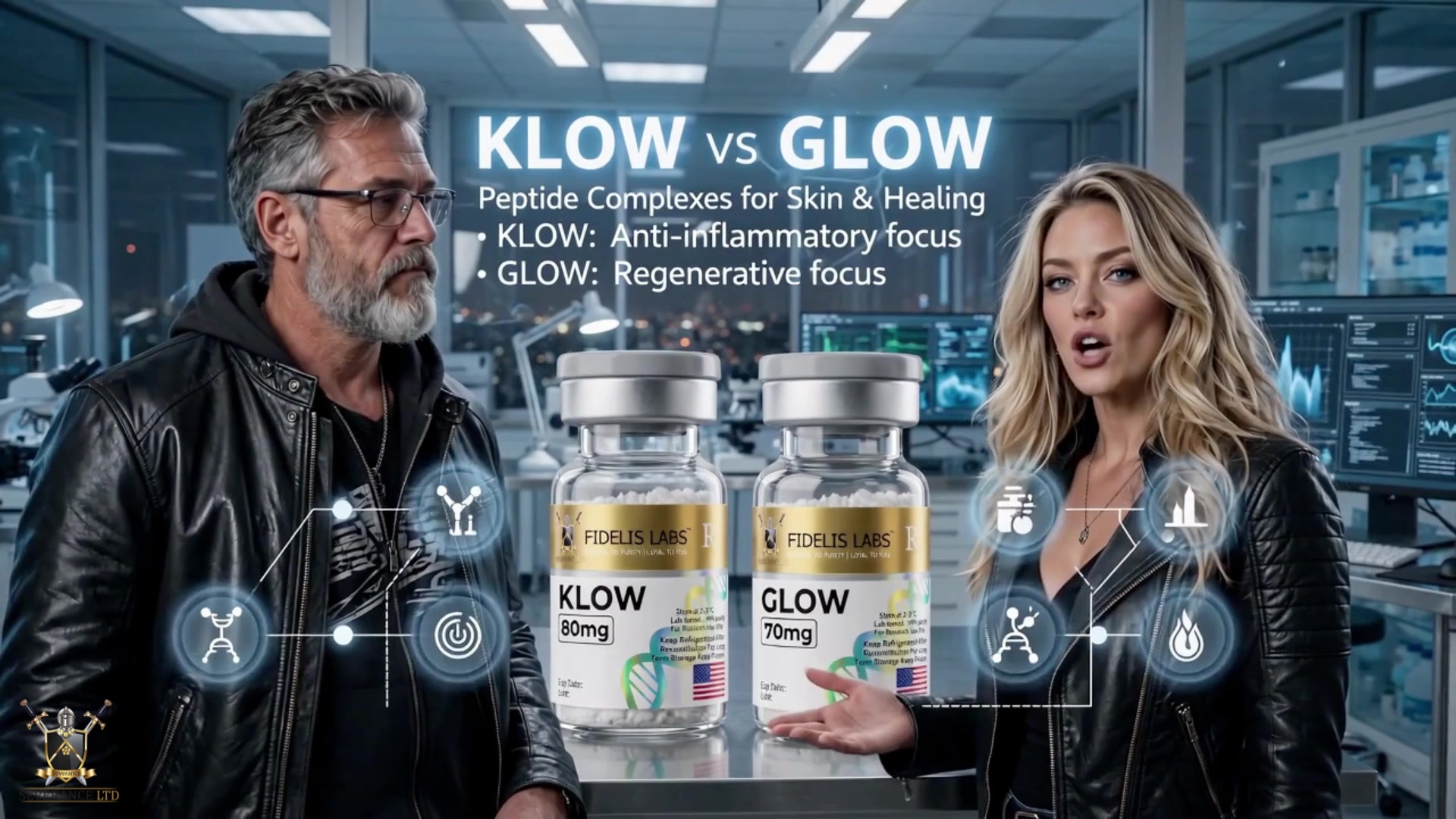
KLOW vs GLOW Peptide Blend Explained (2026): Which One Is Right for Me? GHK-Cu, BPC-157, TB-500, and KPV Compared
What Is Tirzepatide? Dual GIP/GLP-1 and Why Should I Use It Twincretin Explained (2026)
Watch: https://videos.findpeptides.org/watch/what-is-tirzepatide-dual-gipglp-1-twincretin-explained-2026-2